

YMS-Glorysoft (Shanghai) Co.,Ltd.
Product Center
Product Center
智能大数据引擎平台
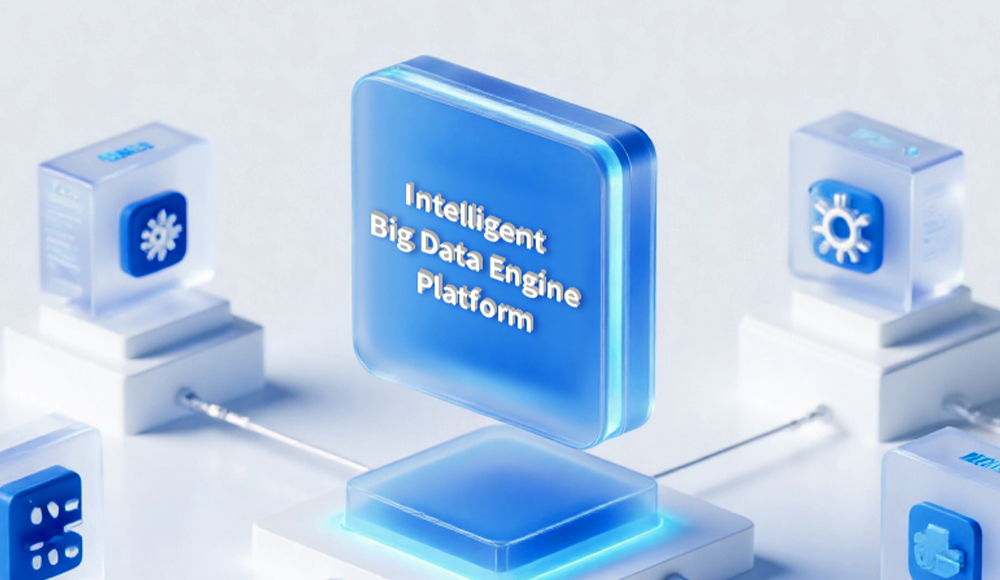
Intelligent Big Data Engine Platform

Centered on combining intelligent algorithms with engineering methodologies to offset gaps in personnel experience, the Intelligent Big Data Engine Platform applies to numerous scenarios including equipment anomaly investigations, quality defect root-cause analysis, and parameter optimization.

Core system modules include:FDC, YMS, VM & EHM, BDP, DMS, BI, and APC/R2R.

  • YMS (Yield Management System)
    Leveraging AI-driven big data analytics and integration with MESwell to monitor yield metrics, defect patterns, and process deviations across multi-site operations in real time.
    Industry Pain Points
    Product Empowerment Value
    Industry Pain Points
    Pain Point 1
    Engineering analysis and mass-production yield are disconnected, making it difficult for engineering conclusions to continuously guide mass-production improvements.
    Pain Point 2
    Yield anomaly analysis relies on manual experience and Excel, resulting in slow root cause localization and non-reproducible conclusions.
    Pain Point 3
    Complex impact factors involving defects, processes, equipment, and materials lack systematic identification means.
    Product Empowerment Value
    Value 1
    Connecting engineering analysis and mass-production yield data to achieve continuous verification and application of engineering conclusions during mass production, forming an "Engineering → Mass Production → Improvement" closed loop.
    Value 2
    Replacing personal experience with standardized analysis workflows and models significantly shortens yield anomaly localization time and enhances analysis result consistency and reusability.
    Value 3
    Utilizing multivariate analysis and factor screening models to accurately identify key yield impact factors, providing clear data evidence for improvement measures.
    Product Advantages

    工程与制造一体化

    Integrating engineering and manufacturing by deeply fusing EDA engineering analysis capabilities with YMS mass-production yield management, preventing analysis results from remaining at the engineering phase.

    工程与制造一体化

    分析结果可解释、可追溯

    Analysis results are explainable and traceable, supporting algorithms such as PLS/RF, outputting explicit impact factors (e.g., VIP rankings), and allowing conclusions to be backtracked and re-verified.

    分析结果可解释、可追溯

    平台化、可扩展

    Platform-based and extensible, it links with modules like ADC, VM, and EHM, continuously expanding into a complete quality and process optimization system.

    工程与制造一体化
  • FDC (Fault Detection and Classification)
    Detecting and classifying manufacturing anomalies in real time and performing root-cause analysis to elevate product consistency and production stability.
    Industry Pain Points
    Product Empowerment Value
    Industry Pain Points
    Pain Point 1
    Manual equipment parameter inspection entails repetitive, burdensome work with low timeliness and incomplete or unauthentic data logging.
    Pain Point 2
    Historical equipment parameter analysis relies on offline tools and analyst skill levels, leading to low analysis efficiency and inconsistent quality.
    Product Empowerment Value
    Value 1
    The system automatically collects and monitors equipment parameter status 24/7, automatically pushing anomaly alarms to responsible personnel.
    Value 2
    Outputting variable importance rankings via AI models clarifies key parameters causing anomalies, accomplishing a leap from "alerting" to "diagnosis".
    Product Advantages

    引入多因子分析算法

    Introducing multi-factor analysis algorithms to achieve fast and accurate root-cause analysis and identification.

    工程与制造一体化

    大数据系统架构

    Big data system architecture supporting millions of parameters and second-level parallel processing.

    分析结果可解释、可追溯
  • VM&EHM (Virtual Metrology & Equipment Health Management)
    The VM system is an AI-driven software solution designed to predict product characteristics (such as film thickness, impedance, and line width) by combining equipment and process parameters with statistical and machine learning models.
    Industry Pain Points
    Product Empowerment Value
    Industry Pain Points
    Pain Point 1
    Critical process parameters cannot be measured in real time, relying on sampling inspection and tacit expertise with lagged feedback.
    Pain Point 2
    Equipment anomalies are mostly discovered after the fact, causing frequent unplanned downtime that hurts yield and capacity.
    Pain Point 3
    Equipment status data is scattered across FDC, MES, EAP, preventing the formation of a health assessment closed loop.
    Product Empowerment Value
    Value 1
    Replacing physical metrology with VM models achieves "near-real-time prediction" of key metrics to correct process drift in advance.
    Value 2
    EHM health scoring and degradation trend forecasting transform equipment anomaly management from " post-event response" to "proactive early warning".
    Value 3
    Integrating multi-source equipment and process data creates a unified equipment health score and decision basis.
    Product Advantages

    模型可落地

    Supporting mature industrial algorithms such as RF, XGBoost, and PLS, ensuring models are explainable and verifiable.

    工程与制造一体化

    系统可集成

    Natively interfacing with MES, FDC, EAP, and YMS without altering existing line architectures.

    分析结果可解释、可追溯

    运维可持续

    Supporting automatic model retraining and version management for long-term operation without relying on manual expert maintenance.

    工程与制造一体化
  • Big Data Platform
    Industry Pain Points
    Product Empowerment Value
    Industry Pain Points
    Pain Point 1
    Production data volume is huge; traditional methods face bottlenecks in extraction, storage, and governance, which are time-consuming, labor-intensive, and costly.
    Pain Point 2
    Data exists independently within separate systems, making cross-linking and comprehensive analytics difficult and failing to unlock data value.
    Pain Point 3
    Diverse data sources, non-uniform formats, and complex interfaces lack standardized tools, creating high entry barriers and long cycles for data integration.
    Product Empowerment Value
    Value 1
    Achieving stable, low-cost storage and efficient management of massive data, laying a solid foundation for data assetization.
    Value 2
    Unifying data across business systems to establish an enterprise single source of truth and unlock data correlation value.
    Value 3
    Rapidly interfacing with heterogeneous data sources through configurable and componentized methods to achieve fast data organizing and readiness.
    Product Advantages

    高可靠去中心化架构

    Adopting a decentralized design with high availability (HA) support to effectively prevent single points of failure, supporting non-stop expansion to guarantee business continuity.

    工程与制造一体化

    高扩展性与生态兼容

    Utilizing mainstream technical architectures with processing capacity scaling linearly with cluster size, seamlessly interfacing with mainstream big data components like Spark, Flink, Kettle, and DataX.

    分析结果可解释、可追溯

    极简低代码/零代码操作

    Offering visual operation that allows users to build complex workflows by dragging and dropping tasks, supporting SQL, Python, Shell, and other task types so business personnel can get started quickly.

    工程与制造一体化
  • DMS (Defect Management System)
    Industry Pain Points
    Product Empowerment Value
    Industry Pain Points
    Pain Point 1
    Equipment like AOI, metrology, and EL continuously generates huge defect files and inspection data. Lacking unified ingestion and real-time processing mechanisms, anomaly information is often only discovered during post-event analysis.
    Pain Point 2
    Current defect analysis is mostly used for post-event traceability; anomalous lots move downstream before discovery, easily causing widespread defect proliferation and elevating rework and scrap risks.
    Pain Point 3
    Upon defect file arrival, the system lacks automatic calculation of key process metrics and online alarm capabilities. Anomalies rely on manual discovery, failing to form an interlocked line of defense: "Inspection → Calculation → Alarm → Interception".
    Product Empowerment Value
    Value 1
    Uniformly ingesting diverse defect files (such as Klarf) to perform real-time parsing and modeling upon file arrival, creating Lot/Wafer/Die multi-level defect data assets that lay the foundation for online analytics and instant interception.
    Value 2
    Real-time calculation of key anomaly metrics upon file arrival triggers instant alerts for out-of-spec lots and interlocks with MES to execute interception or hold releases, effectively blocking defective products from moving downstream and lowering defect proliferation risks.
    Value 3
    Based on historical defect distributions and yield data, AI models predict anomaly trends to issue proactive warnings for high-risk lots and recommend priority analysis targets, elevating proactive anomaly prevention and accuracy.
    Product Advantages

    集“缺陷分析 + 在线计算 + 实时告警 + MES 拦截”于一体的质量防线体系。

    Integrating "defect analysis + real-time calculation + online alerting + MES interception" to respond promptly to defects, achieving true real-time quality protection during production.

    工程与制造一体化

    过程指标与缺陷指标统一建模,异常判定更精准。

    Modeling defect features uniformly with process stages, equipment status, and process parameters supports multi-condition combined judgments, effectively reducing false/missed alarms and elevating interception efficacy.

    分析结果可解释、可追溯

    可叠加 AI 模型,逐步实现“预测型质量控制”。

    Building on real-time interception, anomaly trend prediction and priority handling strategies can be introduced to support continuous evolution from "post-event analysis" to "in-process control + predictive early warning".

    工程与制造一体化
  • BI (Business Intelligence)
    A combination of technologies, strategies, and methods for gathering, analyzing, and presenting data to help enterprises make superior data-driven decisions.
    Industry Pain Points
    Product Empowerment Value
    Industry Pain Points
    Pain Point 1
    Severe data silos make cross-system data integration difficult.
    Pain Point 2
    High entry barriers require IT reliance, making self-service analysis difficult for business personnel.
    Pain Point 3
    Slow response speeds and severe data latency fail to support real-time decision-making.
    Product Empowerment Value
    Value 1
    Utilizing unified data middleware or data lake architectures to integrate multi-source heterogeneous system data, enabling cross-departmental and cross-system data intercommunication and sharing.
    Value 2
    Lowering entry barriers through drag-and-drop visualization technologies allows business users without technical backgrounds to conduct self-service analysis.
    Value 3
    Leveraging in-memory computing, stream processing technologies, and cloud-native architectures to support real-time data analytics and second-level response, satisfying agile decision-making demands.
    Product Advantages

    极简操作

    Ultra-simple operation for instant onboarding by business staff: Featuring no-code drag-and-drop interactions, business users can independently build reports and analyze data, making "everyone an analyst".

    工程与制造一体化

    深度融合、实时互联

    Deep integration and real-time connectivity to break data silos: Supporting one-click ingestion of multi-source data with seamless integration into mainstream MES, EAP, and other systems. Combined with real-time data synchronization, it ensures decision-making data is comprehensive, accurate, and responsive within seconds.

    分析结果可解释、可追溯
  • APC/R2R (Advanced Process Control / Run-to-Run)
    Industry Pain Points
    Product Empowerment Value
    Industry Pain Points
    Pain Point 1
    Process deviations caused by equipment aging and environmental changes, leading to yield loss from process parameter drift.
    Pain Point 2
    Reliance on manual experience for adjustments results in slow response times and poor process consistency.
    Pain Point 3
    Prominent cross-equipment and cross-process data silos leave massive production data lacking intelligent analytics with unextracted value.
    Product Empowerment Value
    Value 1
    Real-time monitoring and automatic compensation to achieve "self-healing" production.
    Value 2
    Models accurately predict process results to optimize parameters in advance.
    Value 3
    Establishing an interlocked analysis platform across process, equipment, and metrology data.
    Product Advantages

    模块化设计

    Modular design allowing on-demand deployment and step-by-step expansion.

    工程与制造一体化

    提供标准化API

    Providing standardized APIs to support client secondary development.

    分析结果可解释、可追溯

    兼容多种半导体制造工艺

    Compatible with diverse semiconductor manufacturing processes.

    工程与制造一体化
Top
首页
电话
邮件
置顶

在线留言

留言 留言
邮箱 邮箱

sales@glorysoft.com

电话 电话

021-5889 9339 / 400 021 1518

×